Home · The Journal · How to Plan a Build-Your-Own Plushie Party Station
How to Plan a Build-Your-Own Plushie Party Station
Some party activities fill time. The good ones send every child home with a small story. Here is how to plan a build-your-own plushie station properly — where it goes, how the children move through it, and the details that make it feel like a ceremony.
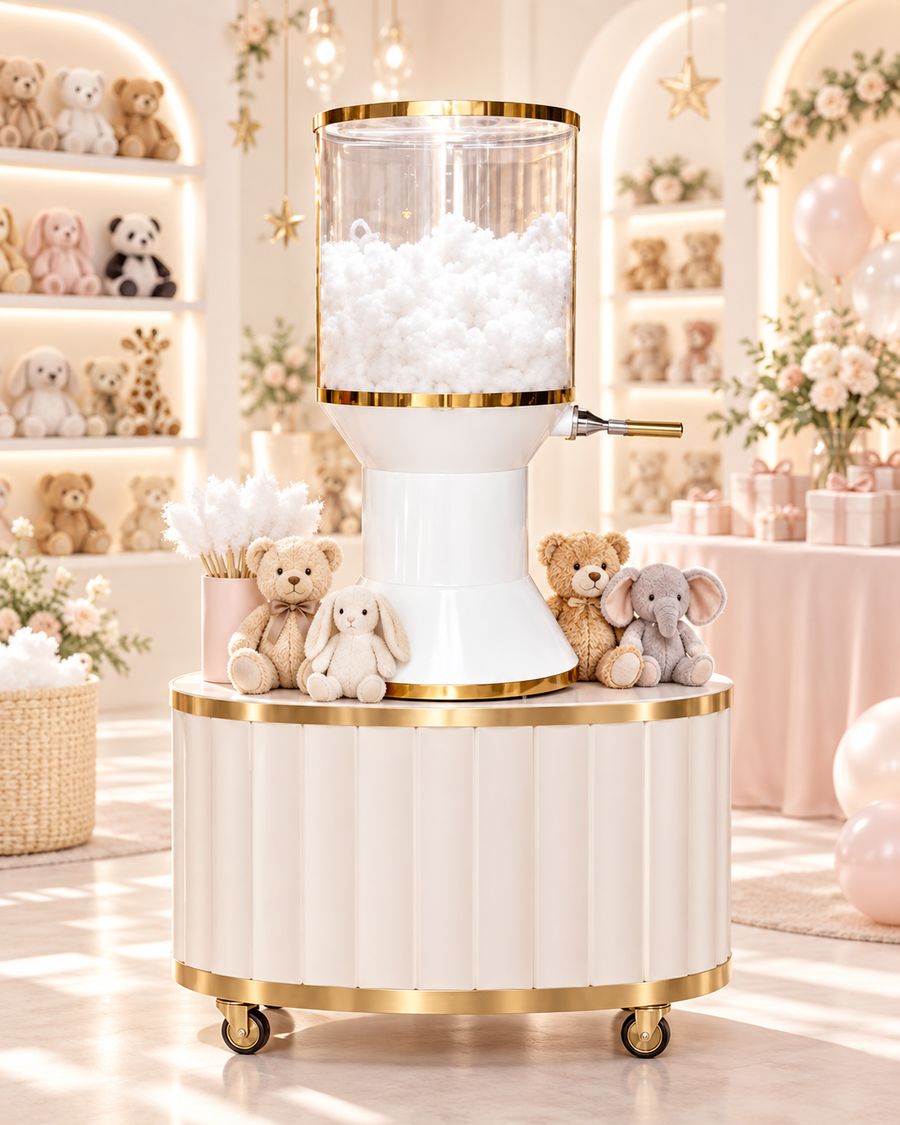
Ask any parent what happens after the cake and you will get the same slightly panicked look. The sugar has landed, the presents are open, and fourteen children are standing in the middle of the room waiting to be told what happens next. A build-your-own plushie station is one of the few answers that works for the whole age range at once — and unlike a magician or a craft that gets left on the table, it sends every child home holding something they made.
This guide is about the planning, not the magic. Where the station goes, how children move through it, how long it actually takes, and which small details turn a queue into a ceremony.
First, be honest about what it is
A plushie station is a sequence, not a table of supplies. Each child chooses an unstuffed friend, fills it, adds whatever ceremony you have built in — a tiny heart, a wish, a name — and then leaves with it. That sequence is what makes it memorable, and it is also what makes it slow if you do not plan for it. Budget roughly three to five minutes per child once things are running, and do the arithmetic before the party: sixteen children is the better part of an hour.
That hour is not a problem. It is the shape of the afternoon. Just do not schedule anything else inside it.
Give the activity its own moment
Set the station just off the main eating area, where children can approach in small groups without blocking the cake, the gifts or the door. The sweet spot in the running order is after the food and before dessert: little guests have eaten, they are ready for a reset, and they still have the energy to make something. Running it before food means half-finished friends on the lunch table. Running it after cake means you are competing with a sugar rush and the first parents arriving for pickup.
A party rhythm that works reliably: welcome and free play · food · plushie-making in small groups · cake · photographs with the new friends. Our kids' party planning timeline shows where an activity slot fits into the wider day, and the 2- and 3-year-old party guide has a shorter version of the same rhythm for toddlers.
Keep the guest flow simple
The single biggest difference between a calm station and a scrum is how many children you invite forward at once.
- Call groups of three to five, not everyone at once. Siblings and close friends together, so nobody is waiting alone.
- Offer one choice at a time. A whole menagerie laid out at once means twelve children changing their minds. Present a small selection, let each child choose, then reset.
- Have a landing spot for finished friends — a basket, a shelf, a row of little chairs — so completed plushies are not carried around a room where cake is about to be served.
- Give the waiting children something to do. This is the part people forget. A low kids' table beside the station, with name tags or certificates to decorate, absorbs the queue completely.
That last point is where the furniture matters more than it sounds. A station without seating means a standing crowd of children holding half-finished bears. With a kid-height table beside it, the queue becomes a second activity.
Make the take-home feel intentional
The difference between a stuffed animal and a keepsake is about ninety seconds of paperwork. A birth certificate, a name tag or a small favor bag makes the plushie feel like part of the celebration rather than another toy that came out of a box.
Our plushie adoption cards tutorial is built for exactly this, and our teddy bear place settings give each finished friend a seat at the table afterwards — which is what turns the activity into the photograph. If you are styling a party table, repeat one or two colors from the chairs, plates or balloon palette at the station itself; a station that matches the table looks planned, and a station in whatever colors the supplies came in looks like a rental.
Plan the space, not just the activity
Walk the room before the day and answer three questions. Where does the line form? Where do finished friends go? And can an adult stand on the other side of the station without being in a doorway?
Leave a clear path to the stuffing machine and a small landing area for completed friends. For younger guests an adult should guide the process — three- and four-year-olds do the stuffing beautifully with a hand on theirs, but they do not queue. If the party is in a tight space, our small-space party guide covers how to fit an activity and a table into an apartment or a finished basement; for a backyard, the backyard party guide has the layout version.
One weather note for outdoor parties: stuffing is a light, fly-away material. A breezy patio is a worse location than a shaded corner indoors, and a rain plan matters more here than for most activities — see our rain-plan guide.
Which ages it suits
Three to nine is the range where it lands hardest. Toddlers love the stuffing itself and need a grown-up's hands alongside theirs. Five- and six-year-olds take the naming extremely seriously and will tell you the plushie's birthday. Eight- and nine-year-olds get competitive about names and then pretend they are too old for it while carrying the bear for the rest of the day. It also works beautifully at a first birthday where the actual guests are older cousins, and at a family gathering where a house full of children needs one calm, contained thing to do.
About M.C.A Plush & Play
Our own mobile plushie experience, M.C.A Plush & Play, is still pre-launch. It is not bookable yet — there is a waitlist, and waitlist families will hear first when launch-season dates open. We would rather say that plainly than take a deposit for a date we cannot promise. Our Plush & Play explainer covers what it will include and how to join the list.
In the meantime, everything above works with any plushie setup you arrange yourself, and the children's tables and chairs that make the station run — the seating, the waiting table, the place for the finished friends — are available now, delivered, set up and picked up across New Jersey and New York. Send your date through Get a Quote and we will confirm availability the same day.
Frequently asked questions
How long does a plushie station take at a party?
Budget three to five minutes per child once the station is running. For sixteen children that is close to an hour, so plan it as the main activity of the afternoon rather than one item among several.
When in the party should the plushie station run?
After the meal and before dessert. The children have eaten, they are ready for a reset, and there is still energy in the room. Running it after cake means competing with a sugar rush and early pickups.
What ages is a build-your-own plushie station best for?
Three to nine is the sweet spot. Toddlers need an adult's hands alongside theirs for the stuffing, and older children take the naming and the certificate seriously. It also works well at family gatherings with a wide age range.
Can I book M.C.A Plush & Play now?
Not yet — Plush & Play is pre-launch and there is a waitlist rather than a booking calendar. Join the waitlist and you will hear first when launch-season dates open. Our children's tables and chairs are available to book now.
Do I need a table if I have a plushie station?
It makes an enormous difference. A kid-height table beside the station gives waiting children somewhere to sit and something to do — decorating name tags or certificates — which is what keeps the line calm.
Little chairs, delivered to your door
Beautiful children's tables, chairs and dessert carts — delivered, set up and picked up across NJ & NY.
Call 917-682-1524